JetFleet G18
JetFleet G18
5.0 / 5.0
(7) 7 total reviews
Couldn't load pickup availability
Important Preorder and Payment Instructions
The JetFleet G18 is currently available for preorder. No payment is required when placing your preorder.
Estimated availability: The next G18 production batch is expected to be in stock in approximately three months. This is an estimate and may change if unexpected production delays occur.
- Add the G18 to your cart and proceed to checkout.
- At the payment step, select G18 Preorder – Pay When Ready to Ship.
- When your G18 is in stock and ready to ship, we will email you a secure payment request. You will then be able to pay by card.
Orders containing a G18 that are placed using any other payment method will be canceled and refunded.
If you also want to purchase in-stock products and pay for them immediately, please place them in a separate order.
JetFleet G18 Controller — GaN-Powered Performance
The JetFleet G18 is a compact, high-performance motor controller built around cutting-edge GaN technology. Designed for demanding electric vehicles and custom high-power applications, it delivers exceptional efficiency and precise motor control.
Every G18 includes a personalized tuning session with our EV specialists to optimize the controller for your specific motor, battery, and application.
Technical Specifications
- Peak Motor Current: ±300 A
- Current Measurement Range: ±406 A
- Sustained Motor Current: More than 200 A for over two minutes with adequate water cooling
- Input Voltage: 60–168 V
- Maximum Battery Configuration: 40S Li-ion
- Component Voltage Rating: 200 V on the standard version
- Weight: Approximately 180 g with standard wiring
- Dimensions: 110 × 51.3 × 29.8 mm, depending on the selected mounting plate or enclosure
Electrical Features
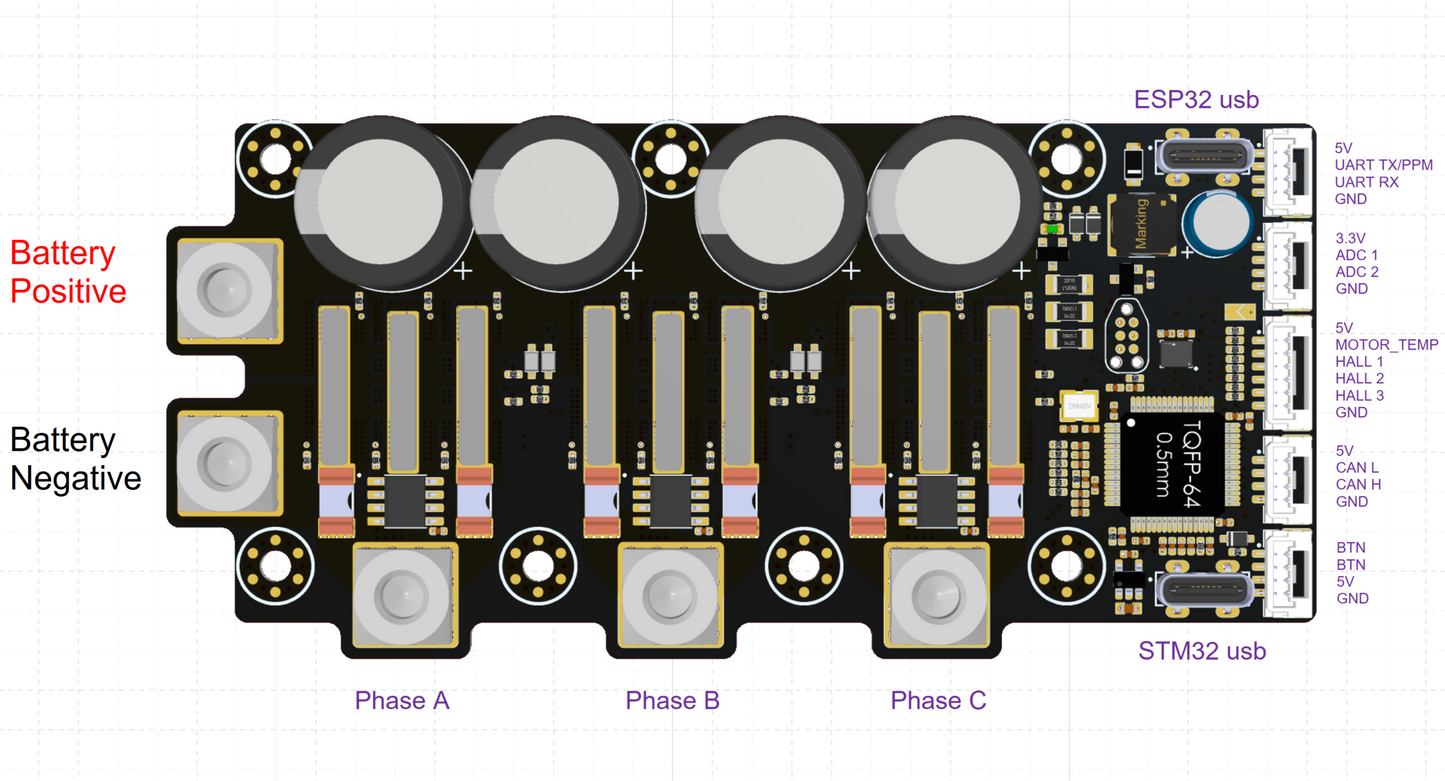
- GaN power stage: Significantly lower losses than conventional silicon MOSFETs, with 24 ns dead time and no body-diode reverse-recovery charge. Learn why GaN matters.
- Integrated connectivity: CAN bus and an LSM6DSV32X IMU
- Heavy-duty construction: Robust 2 mm, 14-layer FR-4 PCB with 2 oz copper
- Integrated ESP32-C3: Runs VESC Express and provides Wi-Fi, Bluetooth, and Lisp scripting out of the box
- Phase-shunt current sensing: Ultra-low-noise V0 and V7 sampling enables silent HFI sensorless operation and accurate current measurement across the full duty-cycle range
- Momentary-button power control: Automatic shutdown after inactivity and low standby consumption when switched off
- Power Connections: M5 crimp lugs for the battery and motor phases
- Signal Connections: Locking JST-GH connectors for CAN bus, ADC, UART, PPM, Hall sensors, encoder, SPI, button, motor temperature, 5 V, and 3.3 V
- Dual USB-C: Separate USB-C connections for the STM32 and ESP32-C3, both accessible through VESC Tool
Advanced Motor Control
- FOC, BLDC, and DC motor control: Compatible with sensorless operation, Hall sensors, encoders, and silent HFI sensorless control
- Flexible control modes: Current, duty-cycle, and PID RPM control
- Comprehensive configuration: Adjustable current, voltage, RPM, power, temperature, and regenerative-braking limits through VESC Tool
Custom-Built Versions
Custom G18 variants are available for specialized voltage, cooling, enclosure, and mounting requirements.
100 V version — 3 × EPC2361 GaN FETs in parallel
Typical combined effective RDS(on): approximately 0.25 mΩ
150 V version — 3 × EPC2305 GaN FETs in parallel
Typical combined effective RDS(on): approximately 0.73 mΩ
200 V version — 3 × EPC2304 GaN FETs in parallel
Typical combined effective RDS(on): approximately 1.17 mΩ
We can also produce custom mounting plates and enclosure solutions to fit your heatsink, existing enclosure, vehicle, or application.
OEM and B2B Solutions
OEM and B2B options are available, including custom voltage configurations, mounting solutions, enclosure options, and application-specific modifications. Volume pricing is available for larger quantities.
Please contact us before ordering if you require a custom voltage version, OEM configuration, custom mounting solution, or B2B quotation.
Important Installation Information
When connecting the battery, always use a proper precharge resistor or precharge circuit. Connecting the battery without precharge can cause extreme inrush current, connector arcing, or permanent controller damage.
Regenerative-braking and battery-voltage limits must be configured correctly in VESC Tool. When properly configured, regenerative-braking current is reduced as the battery approaches its maximum voltage.
Join the JetFleet community on Discord for setup assistance, tuning advice, build discussions, and support from the community surrounding the legendary VESC® project.
VESC® is a registered trademark of Benjamin Vedder.

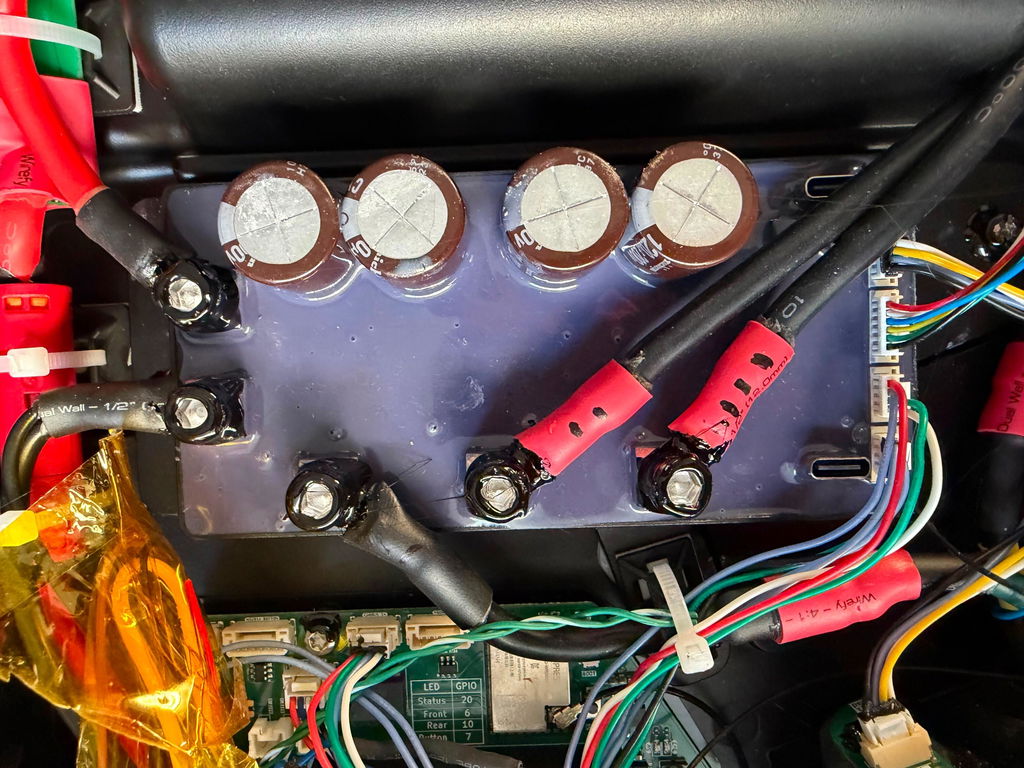
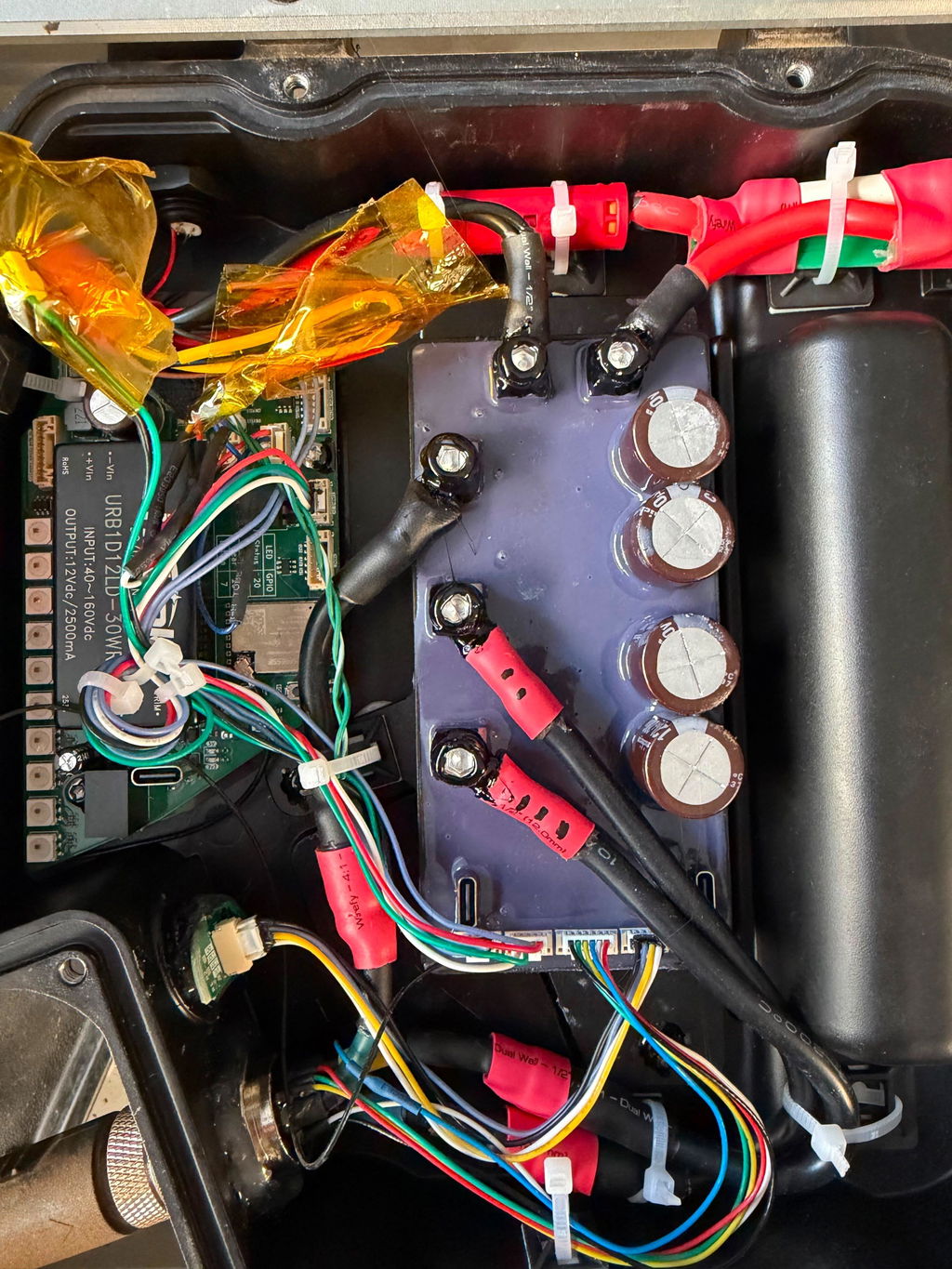
I’ve been testing a pre-production JetFleet G18 ESC in my fully custom 32S high-voltage race board, using a Fusion Core setup with the ESC housed inside the CannonCore motor.
As a racer, its biggest advantage is the outstanding thermal performance. During a demanding trail race in Mayrau, most other boards overheated after only one or two laps, while I completed four hard laps before the G18 even reached high temperatures.
It delivers strong, consistent power and has performed flawlessly under real race conditions, including powering me to first place at the Xerace × Electro Hussars race in Hungary. JetFleet’s customer support has also been exceptionally fast and helpful throughout the entire process.
For a high-performance race board, the G18 has been extremely impressive.
I've got 258 mi on this controller. With my racing I use this for, they've been all very rough trail miles.
40s2p battery system, and the G18 controller is mounted inside the motor on a fusion core build in the world's largest self balancing mountain board I call the Monster Board. Normally, I'd prefer to wait a full year of a use and abuse or until the component breaks to leave a review just to make sure I know where the breaking points end up. But, so far it's been surprisingly durable. I've got it wet. I've got it hot and I've pushed quite a bit of amperage through it (170 motor current max/ 300 absolute maximum current. *firmware maximum limit is 300*). But yeah it's still kicking. The external antenna has great signal but it is kind of delicate. So be careful with that part.
|
Hope this helps🤙
@Luke Austin
@Full_Send_Luke
In my opinion the best custom VESC OneWheel controller you can buy for money. A lot of headroom for any custom board. I'll go to 40s1p soon... Sadly the cells I wanted to use are not available form nkon.nl at the moment. This will become big. Maybe you can buy custom VESC OneWheel's manufactured or shoud I say assembled in Germany soon. Stay tuned...
For context, I’m running the G18 in a 38s1p (159.6V) Onewheel XRC layout with a TFL Sidewinder motor. I’ve also spent considerable time riding JetFleet’s F6, which gives me a useful point of comparison.
There are three things about the G18 that really stand out: smoothness, capability, and thermal performance. Together, they’re why I think this controller is something special.
Smoothness
More than the voltage or power capability, the thing that impressed me most is how incredibly smooth the G18 feels under your feet.
The G18’s IMU operates at 3840Hz versus the 832Hz commonly used on other controllers. Combined with its GaN power stage and other architectural differences, there are several possible reasons for what I’m feeling. I can’t attribute it to any single one—but I can absolutely feel the difference.
The best analogy I can give is drawing a circle using straight lines. Draw it with 10 segments and you can still perceive the individual edges. Draw it with 50 and those transitions begin to disappear.
That’s what the G18 feels like.
A great example is nudging a square-edged curb. With another controller, you distinctly feel that sharp edge and the board reacting to it. With the G18, somehow that same curb feels rounder. The obstacle hasn’t changed; the way the board responds beneath you has.
It feels like there’s simply more resolution between the rider, board, and terrain.
Capability
The obvious advantage is the electrical capability: up to 168V and ±300A motor current.
I’m actually using that capability rather than admiring it on a spec sheet. My 38s pack reaches 159.6V fully charged, putting this build into territory that wasn’t practical with previous generations of Onewheel-form-factor controllers.
It’s not about chasing huge numbers for bragging rights. That additional headroom gives builders considerably more freedom when designing high-performance boards.
The G18 feels less like an incremental improvement and more like hardware designed around where high-performance VESC builds are heading next.
Thermals
With this voltage and current capability, I expected heat management to become part of the equation. Instead, the G18 has been remarkably cool.
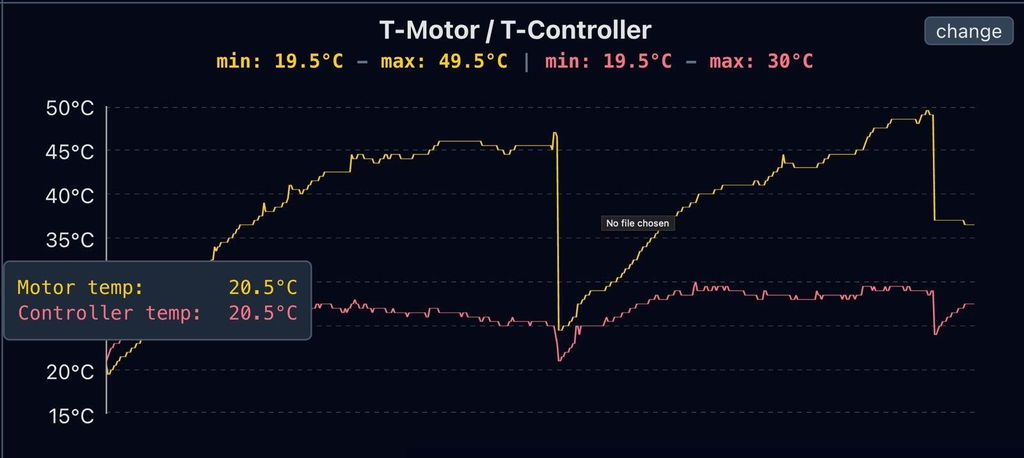
During hard trail riding on hot days, I’ve generally seen controller temperatures within roughly 10°C of ambient. The highest I’ve recorded is only 40°C on a 32°C (90°F) day.
I’ve compared it directly with my F6 under similar riding conditions on the same day. Despite the F6 operating at considerably lower voltage, the G18 ran at comparable temperatures and sometimes cooler. Other G18 riders have reported similarly impressive thermal behavior, so my experience doesn’t appear to be an outlier.
What would I change?
I genuinely wish the G18 had an onboard 12V accessory output capable of roughly 3A.
Ironically, this problem is created by one of the G18’s greatest strengths. Once your battery exceeds 150V, finding a compact buck converter capable of accepting full pack voltage while providing enough 12V power for lighting becomes surprisingly difficult.
A protected 12V/~3A output would make lighting and accessories dramatically easier to integrate and make the G18 an even more complete high-voltage platform.
Final thoughts
The headline numbers—168V, ±300A, 3840Hz IMU—are impressive, but after actually living with the G18, the numbers aren’t what I like most about it.
It’s how refined the board feels while delivering that capability.
It lets me run a 159.6V build, stays remarkably cool while doing it, and somehow makes the terrain beneath the board feel smoother and more controlled than other controllers I’ve ridden.
There are controllers that make a board more powerful. What impressed me about the G18 is that it makes an extreme high-voltage board feel more refined at the same time.
For me, that’s what makes the G18 special.
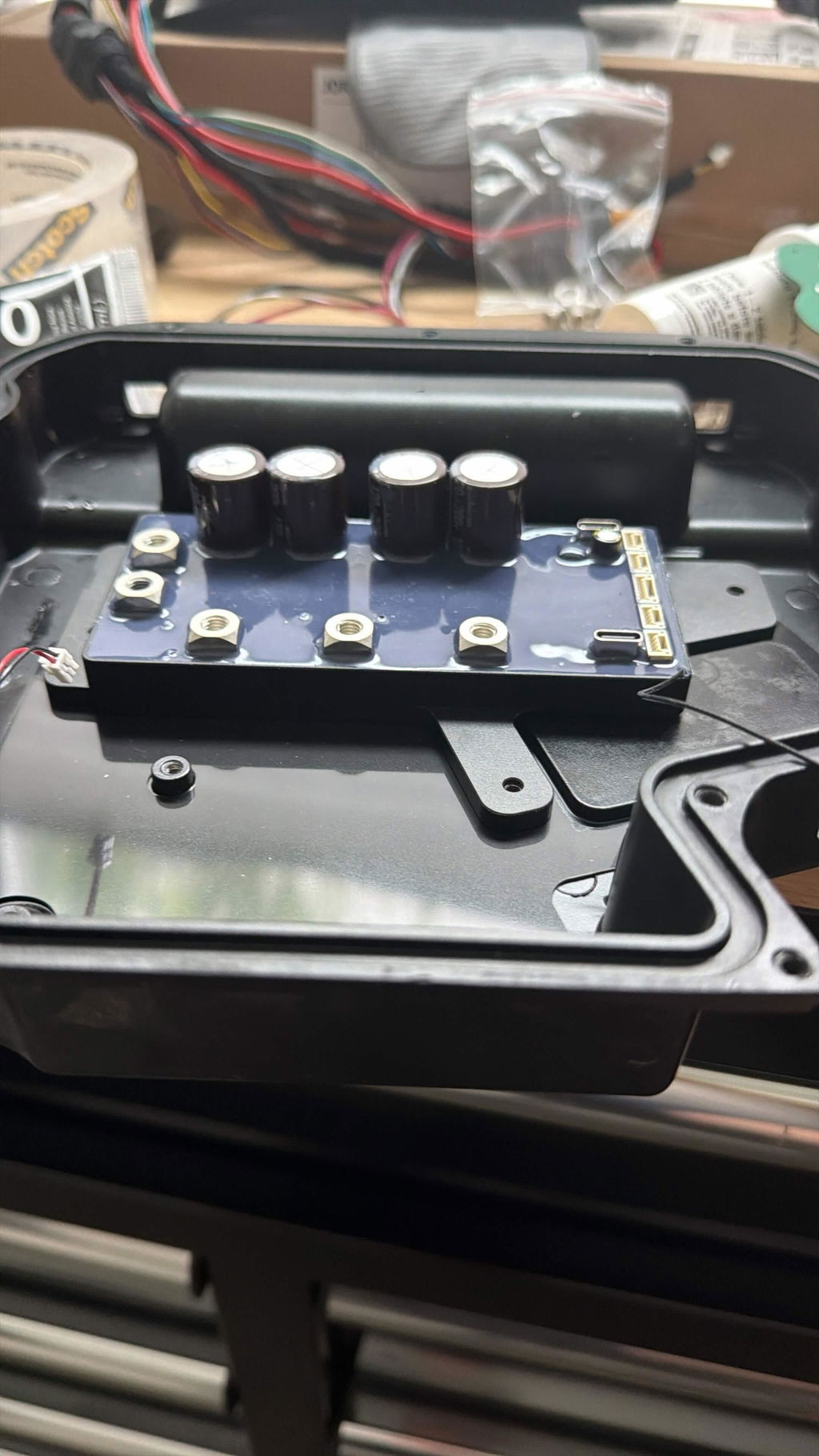
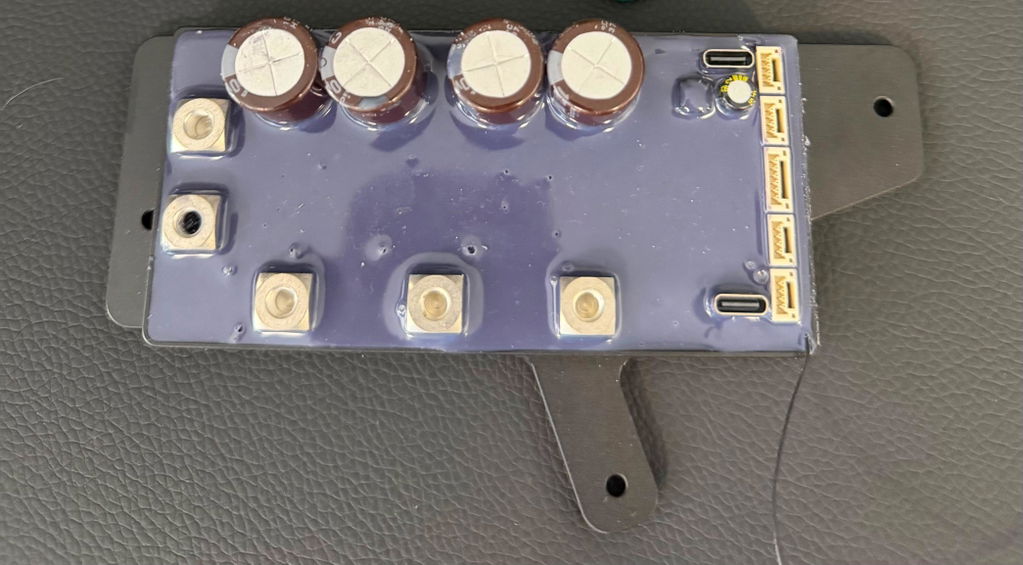
Running the JetFleet G18 on a VESC Onewheel with a 40S/168V pack has been a standout experience. The universal plate worked great for me but if needed an included GT plate or a Thor plate will make installation quick and clean.
What impressed me most is the near-silent motor operation and silky-smooth control—noticeably quieter and more refined than other VESC units I’ve tried and still have. Thermals stay excellent (typically just 12–19 °C over ambient), thanks to the efficient GaN stage. The high-rate IMU delivers a locked-in, oscillation-free feel, and the built-in ESP32-C3 plus full 168 V support make it ideal for serious high-voltage builds.
Support from the JetFleet team has been responsive and helpful.
Overall, if you want quiet, efficient, high-voltage performance with solid support, the G18 is an easy recommendation.